

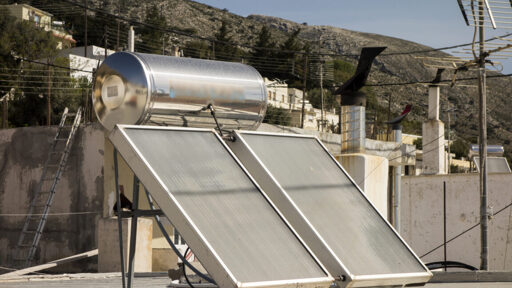
Heating accounts for nearly half of the global energy demand, and two-thirds of that is met by burning fossil fuels like natural gas, oil, and coal. Solar energy is a possible alternative, but while we have become reasonably good at storing solar electricity in lithium-ion batteries, we’re not nearly as good at storing heat.
To store heat for days, weeks, or months, you need to trap the energy in the bonds of a molecule that can later release heat on demand. The approach to this particular chemistry problem is called molecular solar thermal (MOST) energy storage. While it has been the next big thing for decades, it never really took off.
In a recent Science paper, a team of researchers from the University of California, Santa Barbara, and UCLA demonstrate a breakthrough that might finally make MOST energy storage effective.
In the past, MOST energy storage solutions have been plagued by lackluster performance. The molecules either didn’t store enough energy, degraded too quickly, or required toxic solvents that made them impractical. To find a way around these issues, the team led by Han P. Nguyen, a chemist at the University of California, Santa Barbara, drew inspiration from the genetic damage caused by sunburn. The idea was to store energy using a reaction similar to the one that allows UV light to damage DNA.
This is interesting, especially the idea of using the sun itself to cause the molecule to change state directly, instead of relying on electrical or other chemical steps. If they can do something to pull it off, great. Really cool idea.
However I have to point out that we can already store solar energy and release it as heat months (or years) later using synthetic fuels, which are completely carbon-neutral when burned and briefly carbon-negative when produced using renewable energy and atmospheric carbon (if required). It is rather inefficient yes, but with sufficient renewable energy, efficiency no longer needs to be our primary concern. In fact, I think overall we focus on efficiency far too much, to our detriment in many cases, durability and resiliency is often in direct contraction to efficiency, and we have created a lot of systems that are very fragile at the very limit of what’s possible in the name of efficiency and left ourselves very little breathing room. But that’s a different discussion.
Synthetic fuel is a fraught topic because it’s so vulnerable to greenwashing where fossil fuel companies muddy the waters with “carbon capture” and repackage their fossil fuels into “biodiesel” and “blue hydrogen” and other deceitful scams, and in practice there is little understanding of where the synthetic fuels are actually coming from due to the nuance involved. There is no accountability for abuse, and that makes them untenable at this stage.
However, it doesn’t HAVE to be like that. With proper regulation and oversight (which granted may not be possible in a world run by criminals and billionaire sociopaths), synthetic fuels would allow us to avoid turning the massive amounts of investment over the last 100 years into all the world’s fuel-burning equipment which is both functional, practical, and in many cases the best tool for the job, into illegal trash we are forced to dispose of. It is not trash, only fossil fuel is trash. Synthetic fuels would change the economics of fuel usage significantly, and some of that equipment might end up being trash anyway, but probably not all of it. We aren’t in a position to make those kind of fuels practical or affordable yet, but I urge people not to discount them completely for the future. Chemical energy storage is amazing, and fuel is a very potent and reliable form of chemical energy storage we are already very experienced with and well equipped for.
It’s especially important for the people who don’t “like” electric cars, continue to have range anxiety, still use fossil fuels for heat, or backup power, whatever, the idea of synthetic fuels should be left on the table, to leave the door open for their lovely classic gas guzzler to run on environmentally friendly fuel in the future. Because it is absolutely possible. It is a solution that we can at least be open to in the future when the impending crisis has started being addressed properly (if it ever gets to that point… *sigh*). The economy is going to say whatever the economy is going to say about it, and I get there are other priorities that need to be addressed first, but there’s no reason to slam the door in people’s face if they want to keep burning fuels. Provide a path forward to meet their needs, and let them make the decision whether it’s worth it to them or not. The heavy-handed, high-horse style “you’ll use an electric car from now on and you’ll LIKE it!” dictates really don’t help convince anyone of anything, and I think we need to understand that people do need to be convinced. Gently.
I think synthetic fuels might be good for situations where there are no feasible alternatives for now, like airplanes. But while they may not increase the net amount of greenhouse gasses in the atmosphere, they would still produce pollution locally, so I don’t think they would be desirable for things like cars. Also, we need to reduce the number of cars irrespective of whether they’re electric or not (for many reasons, but in the context of climate change, because manufacturing a car also generates a lot of greenhouse gasses and is an inefficient use of resources), so I don’t think that trying to soothe people’s irrational fears* by having synthetic fuels as an in-between so that they can ultimately be convinced to go electric is the right approach. In a world where most cars are capital assets instead of many people’s sole lifeline out of suburban purgatory, it would be a lot easier to say “you’ll use an electric car from now on and you’ll LIKE it!”, so I think it would it would be more fruitful to try to get closer to that world.
But my impression of this research is that the goal of it is having something that can be installed in people’s homes. I doubt we’re ever going to be producing synthetic fuels in people’s homes at a large scale.
*EDIT: I think I came off as too dismissive here, so I’d like to rephrase this and expand upon it. For the vast majority of people, range anxiety is an unfounded fear. That doesn’t change that the fear is real, but it does mean that it can dispelled by having a sufficient number of people in their community show that it is unfounded. But having synthetic fuels as an off-ramp, even though it can at best be a temporary measure that still has many of the problems of fossil fuels, would significantly slow down this process. There are, of course, also rational reasons not to get an EV; not being able to afford one, living somewhere with a flaky electrical grid etc., but those are things that need to be solved regardless and the very institutions that are incentivising EV can do something about (of course, the best reason to not get an EV is to not need a car to begin with).
I want to believe.