

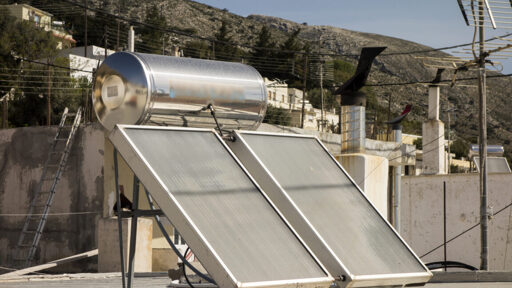
Heating accounts for nearly half of the global energy demand, and two-thirds of that is met by burning fossil fuels like natural gas, oil, and coal. Solar energy is a possible alternative, but while we have become reasonably good at storing solar electricity in lithium-ion batteries, we’re not nearly as good at storing heat.
To store heat for days, weeks, or months, you need to trap the energy in the bonds of a molecule that can later release heat on demand. The approach to this particular chemistry problem is called molecular solar thermal (MOST) energy storage. While it has been the next big thing for decades, it never really took off.
In a recent Science paper, a team of researchers from the University of California, Santa Barbara, and UCLA demonstrate a breakthrough that might finally make MOST energy storage effective.
In the past, MOST energy storage solutions have been plagued by lackluster performance. The molecules either didn’t store enough energy, degraded too quickly, or required toxic solvents that made them impractical. To find a way around these issues, the team led by Han P. Nguyen, a chemist at the University of California, Santa Barbara, drew inspiration from the genetic damage caused by sunburn. The idea was to store energy using a reaction similar to the one that allows UV light to damage DNA.
I think synthetic fuels might be good for situations where there are no feasible alternatives for now, like airplanes. But while they may not increase the net amount of greenhouse gasses in the atmosphere, they would still produce pollution locally, so I don’t think they would be desirable for things like cars. Also, we need to reduce the number of cars irrespective of whether they’re electric or not (for many reasons, but in the context of climate change, because manufacturing a car also generates a lot of greenhouse gasses and is an inefficient use of resources), so I don’t think that trying to soothe people’s irrational fears* by having synthetic fuels as an in-between so that they can ultimately be convinced to go electric is the right approach. In a world where most cars are capital assets instead of many people’s sole lifeline out of suburban purgatory, it would be a lot easier to say “you’ll use an electric car from now on and you’ll LIKE it!”, so I think it would it would be more fruitful to try to get closer to that world.
But my impression of this research is that the goal of it is having something that can be installed in people’s homes. I doubt we’re ever going to be producing synthetic fuels in people’s homes at a large scale.
*EDIT: I think I came off as too dismissive here, so I’d like to rephrase this and expand upon it. For the vast majority of people, range anxiety is an unfounded fear. That doesn’t change that the fear is real, but it does mean that it can dispelled by having a sufficient number of people in their community show that it is unfounded. But having synthetic fuels as an off-ramp, even though it can at best be a temporary measure that still has many of the problems of fossil fuels, would significantly slow down this process. There are, of course, also rational reasons not to get an EV; not being able to afford one, living somewhere with a flaky electrical grid etc., but those are things that need to be solved regardless and the very institutions that are incentivising EV can do something about (of course, the best reason to not get an EV is to not need a car to begin with).