Wow:
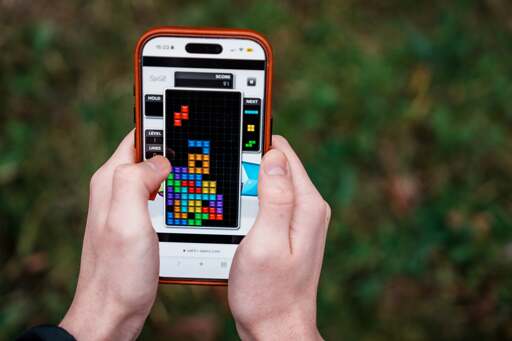
After just one month, researchers found a stark reduction in intrusive memories, commonly known as flashbacks, for those using the Tetris-based treatment – ten times fewer than either control group. It remained highly effective after six months, with 70% of participants who received it reporting no intrusive memories at all, even alleviating other PTSD symptoms.
That’s a crazy positive result. Hopefully there is more research into this treatment. My wife still has PTSD and other early childhood trauma related issues that are being treated with NMDR, which is definitely effective, but it sounds like this could potentially accentuate that treatment for a more positive outcome.
It’s too good, and its funded by a corporation, and its got a very low sample size, and it’s tied in with some wacky “digital therapy solution”. I wouldn’t be surprised if the control groups actually worsened because the service just sucked and the tetris version included less of that service.
I am also treating this one limited study with a huge grain of salt, but I’m an eternal optimist so I hope my pessimism is wrong.
Just replace traumatic memories with falling bricks. 😃
*patient with PTSD after nearly being crushed by a falling pallet of bricks on a construction site:
AAAAAAAAAAAAAAAAAAAAAHHHHHHH–
Actually this is effectively how it works.
I’m genuinely shocked at there only being negative comments here. I’m doubtful anyone actually read the article, let alone the study. This is wonderful news and good science, it should be celebrated.
The participants in the study must not be playing tetris the grand master.
Interesting, I feel like I’ve heard about this ‘mental image rotation’ exercise before, though I forget in what context. Pretty cool
https://knowyourmeme.com/memes/rotating-a-cow-in-mind
I suspect the memes started because research into image rotation got in the news cycle, and the Internet took it from there.
deleted by creator
Did you know there’s this new thing called a ‘news article’ where you can read about what’s being discussed?
I used to be like you. I’d just imagine what I thought people were talking about, then I’d tell them how they were wrong. Now we can use this new technology to read about what is being discussed first so we can all talk about the SAME THING and tell others how they’re wrong! Wow!
The OP was even kind enough to provide a link so we can all read together! You should give it a try. The future is now!
Regrettably, even on Lemmy, people only react to the title.
As I understand it, it’s not about “just chill by playing tetris”, but more uses tetris to reinforce another mental method to make intrusive visual memories less intense and prevalent.
After recalling a memory, participants learned how to use a cognitive skill called mental rotation, which involves rotating 2D and 3D shapes using your ‘mind’s eye’. They then used this skill to play a slower form of the video game Tetris, which similarly involves rotating geometric blocks. This is thought to occupy the brain’s visuospatial areas, competing with the visual flashback, weakening its vividness and emotional impact – and critically, the frequency with which it intrudes.
Read the article before posting next time, please.
Yeah, this is on me this time. Not sure what drove me there.
That’s the dumbest shit I ever read.
Oxford was ranked the world’s best research university for 10 years in a row.
They also started shilling AI recently. Unfortunately, all good things come to an end.
What, that Tetris is soothing?
Yes.
Okay.
The ground-breaking study, funded by Wellcome, carried out a randomised controlled trial of 99 healthcare workers exposed to trauma at work during the Covid-19 pandemic. The results demonstrate huge potential to implement a highly scalable, low intensity, easily accessible digital treatment that could transform how we prevent and treat PTSD for people who have been exposed to trauma worldwide.
NO.
NO NO NO. You don’t get to have 9 in 10 dentists promote some gamified healthcare app to the masses, fuck this. This sounds like the BetterHelp Scam 2.0.
how so? this is a method that would work completely offline and without any form of centralization i can imagine
It’s a study with a very low sample size funded by some corporation and with the intention to normalize “digital treatment” similar to BetterHelp. This has red flags front to back.
how is this digital treatment similar to BetterHelp? how would it possibly be bad in factors other than efficacy, like BetterHelp was due to data nightmares and advertising a different mechanism? this isn’t even online
99 is a more than enough sample size if your RCT’s Bayes factor is 114 and 15.8 for better efficacy than -control and -regular treatment respectively, which corresponds to “extreme” and “strong evidence” (Lee and Wagenmakers 2013, p. 105; adjusted from Jeffreys, 1961). The Lancet also peer-reviewed the claim “The Bayesian adaptive trial design enabled efficient evaluation with early stopping when convincing evidence was reached (n=99).[2]”
indeed further testing is needed to establish subgroup effects and improve generalizability but this is already quite promising