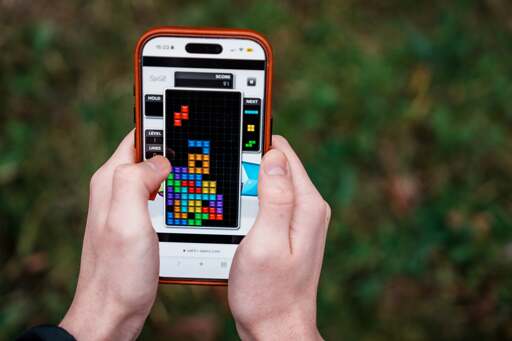
New research involving Oxford researchers has shown that a simple digital intervention that includes gameplay can dramatically reduce intrusive memories of trauma in a month, even to the point of being symptom-free after six months. This treatment was also very effective at reducing the symptoms of post-traumatic stress disorder (PTSD) more generally. The findings have been
The ground-breaking study, funded by Wellcome, carried out a randomised controlled trial of 99 healthcare workers exposed to trauma at work during the Covid-19 pandemic. The results demonstrate huge potential to implement a highly scalable, low intensity, easily accessible digital treatment that could transform how we prevent and treat PTSD for people who have been exposed to trauma worldwide.
NO.
NO NO NO. You don’t get to have 9 in 10 dentists promote some gamified healthcare app to the masses, fuck this. This sounds like the BetterHelp Scam 2.0.
It’s a study with a very low sample size funded by some corporation and with the intention to normalize “digital treatment” similar to BetterHelp. This has red flags front to back.
how is this digital treatment similar to BetterHelp? how would it possibly be bad in factors other than efficacy, like BetterHelp was due to data nightmares and advertising a different mechanism? this isn’t even online
99 is a more than enough sample size if your RCT’s Bayes factor is 114 and 15.8 for better efficacy than -control and -regular treatment respectively, which corresponds to “extreme” and “strong evidence” (Lee and Wagenmakers 2013, p. 105; adjusted from Jeffreys, 1961). The Lancet also peer-reviewed the claim “The Bayesian adaptive trial design enabled efficient evaluation with early stopping when convincing evidence was reached (n=99).[2]”
indeed further testing is needed to establish subgroup effects and improve generalizability but this is already quite promising


NO.
NO NO NO. You don’t get to have 9 in 10 dentists promote some gamified healthcare app to the masses, fuck this. This sounds like the BetterHelp Scam 2.0.
how so? this is a method that would work completely offline and without any form of centralization i can imagine
It’s a study with a very low sample size funded by some corporation and with the intention to normalize “digital treatment” similar to BetterHelp. This has red flags front to back.
how is this digital treatment similar to BetterHelp? how would it possibly be bad in factors other than efficacy, like BetterHelp was due to data nightmares and advertising a different mechanism? this isn’t even online
99 is a more than enough sample size if your RCT’s Bayes factor is 114 and 15.8 for better efficacy than -control and -regular treatment respectively, which corresponds to “extreme” and “strong evidence” (Lee and Wagenmakers 2013, p. 105; adjusted from Jeffreys, 1961). The Lancet also peer-reviewed the claim “The Bayesian adaptive trial design enabled efficient evaluation with early stopping when convincing evidence was reached (n=99).[2]”
indeed further testing is needed to establish subgroup effects and improve generalizability but this is already quite promising