

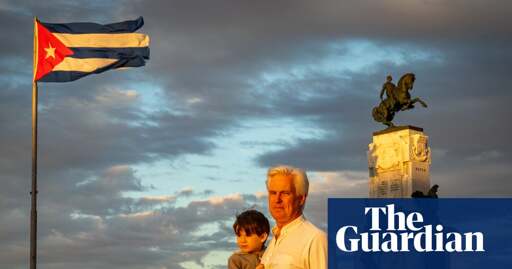
Felix Valdés García was nine years old when the revolutionaries came to blow up his trees. It was the verge of the 1970s and his father, Felin, was losing the family farm to Cuba’s 10-year-old communist regime. A push called the Revolutionary Offensive was under way, mobilising the people to sow, clean and harvest 10m tonnes of sugar cane in an effort to make Cuba financially independent. The land needed to be cleared.
For decades the family had nurtured their 800 hectares of rich loam alongside the meandering Sagua River. Eight couples, all related, worked the fields, while Felix and his sister had fruitful adventures among the royal palms, avocado, mango and magnificent ceiba.
“The sappers arrived,” Felix writes in his family memoir. “A gang of agile men who opened holes in the roots and placed charges of dynamite. There was a terrible roar and the trees flew into the sky, defying gravity, then fell shuddering with broken branches.”
Felix is my father-in-law, and I recall this moment when I think about Cuba’s revolution, which is often as the country spirals into tragedy around me.