

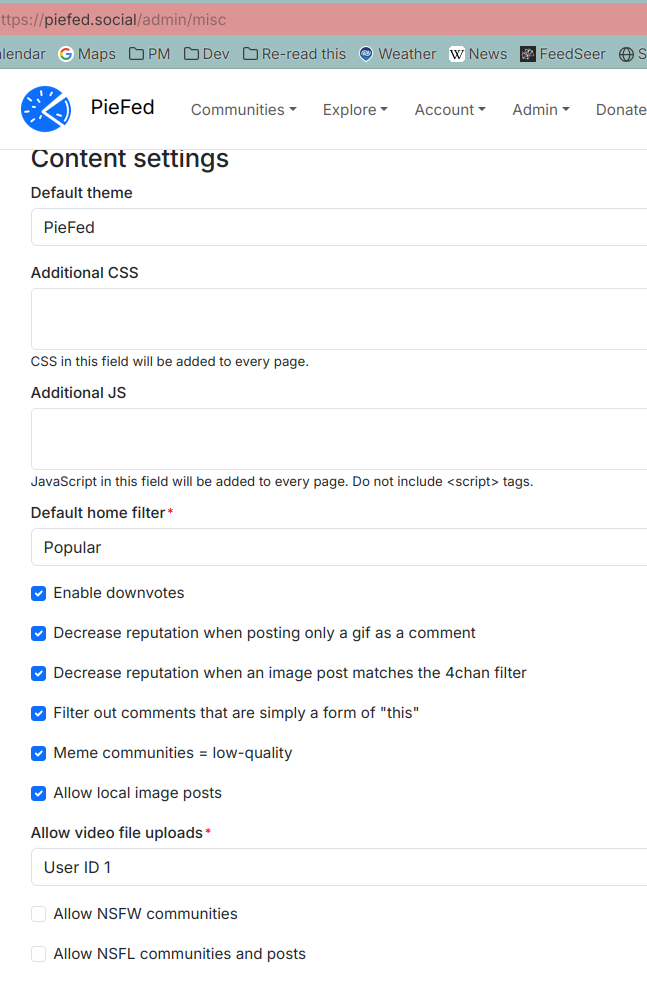
A few people in the other thread assumed that it was required to fork the code to disable those filters. That’s not the case, the filters can be configured, and are off by default.
To hide the reputation system, here’s a line of CSS that admins can add in the admin area to hide it for every user
That CSS line can also be used by any user wanting to hide the score at the user level.
These 2 statements are incompatible.
Plus depending on the snippets they definitely can tell how things work
Simple != few lines of code, nothing incompatible about those two statements
Saying the simple code needs lots of context outside of the code block says it’s either not simple or not easy to understand
« The problem with grabbing small snippets of code is a lot of context is lost.» does not mean that a lot of additional code is required to understand the context, additionally, simple code may require you to read a bit of code to understand it.
Simplicity does not mean small scale, nor that it must be understood at a glance.
Rich Hickey got a great presentation where he discuss simplicity vs complexity. It’s worth a watch if you want to better understand the concepts.
https://www.infoq.com/presentations/Simple-Made-Easy/
Previous threads about these filters were people complaining about them being hardcoded, completely ignoring that they are completely optional and off by default. It would go something like this:
Look at this awful thing PieFed does!
def do_the_thing():
    # relatively simple code that does the thing
It completely ignored the context that the
do_the_thingfunction is only called if the admin wants to do the thing.Most of the issues people have brought up have been about why the snippets are even in the code not trying to obscure what the code does.
Again it’s why is this a thing