That blinking is a good thing. That means that the bulb is running on a pre-heat starter, which gets the electrodes hot before sending full voltage through the fixture. This greatly extends the light’s lifespan. The modern “rapid start” and “instant start” starters just do the shotgun approach of forcing a ton of voltage through the tube, which succeeds in instantly starting it but also blasts off some of the emissive coating on the filaments. A tube running on one of those starters will fail a lot faster and the ends of the tubes will blacken quickly from the coating.


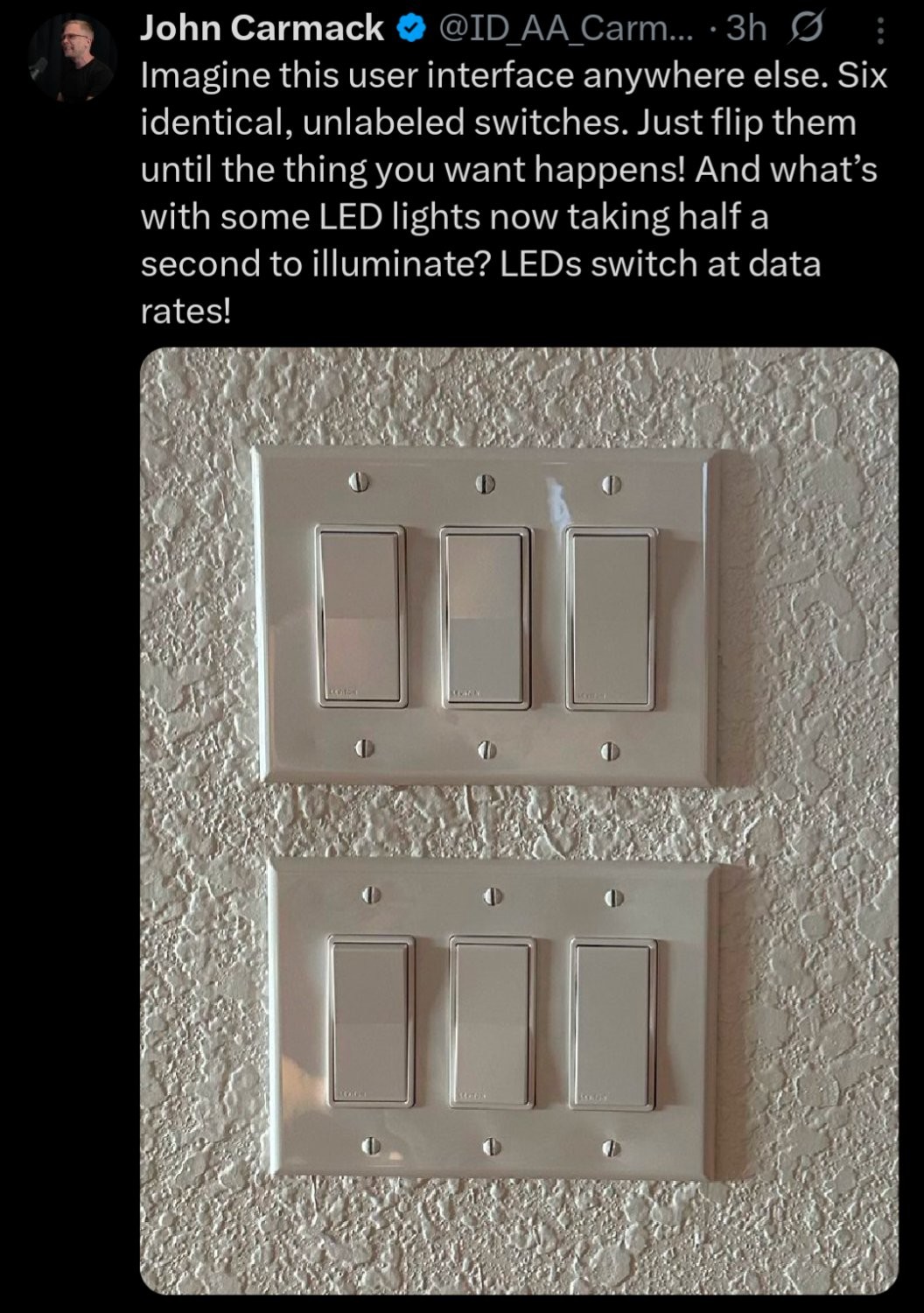
Never noticed an issue with LEDs. Those CFLs though.
Blink.
Blink.
Blink blink.
Bzzzzzzz…
I heard and felt this comment at the same time. Bravo! 👏
[Dim]
[Little less dim]
[Still dim]
[Can see a bit through the dimness]
[Functional but still dim]
“Fuck it I’ll ignore it”
[5 minutes later] “Hey I can see.”
Don’t forget about the crappy color temperature/color rendering index until they finished warming up.
That blinking is a good thing. That means that the bulb is running on a pre-heat starter, which gets the electrodes hot before sending full voltage through the fixture. This greatly extends the light’s lifespan. The modern “rapid start” and “instant start” starters just do the shotgun approach of forcing a ton of voltage through the tube, which succeeds in instantly starting it but also blasts off some of the emissive coating on the filaments. A tube running on one of those starters will fail a lot faster and the ends of the tubes will blacken quickly from the coating.
You just perfectly described the CFLs in my detached, unheated garage during the winter
mmamammmmammamamaaamammma