

31·
2 days agoPart of what caught my attention is a feature that the current version removed with a note that it was being re-worked for the next release. It has been reliable for me, but there is also regular activity in the bug reports.
Part of what caught my attention is a feature that the current version removed with a note that it was being re-worked for the next release. It has been reliable for me, but there is also regular activity in the bug reports.
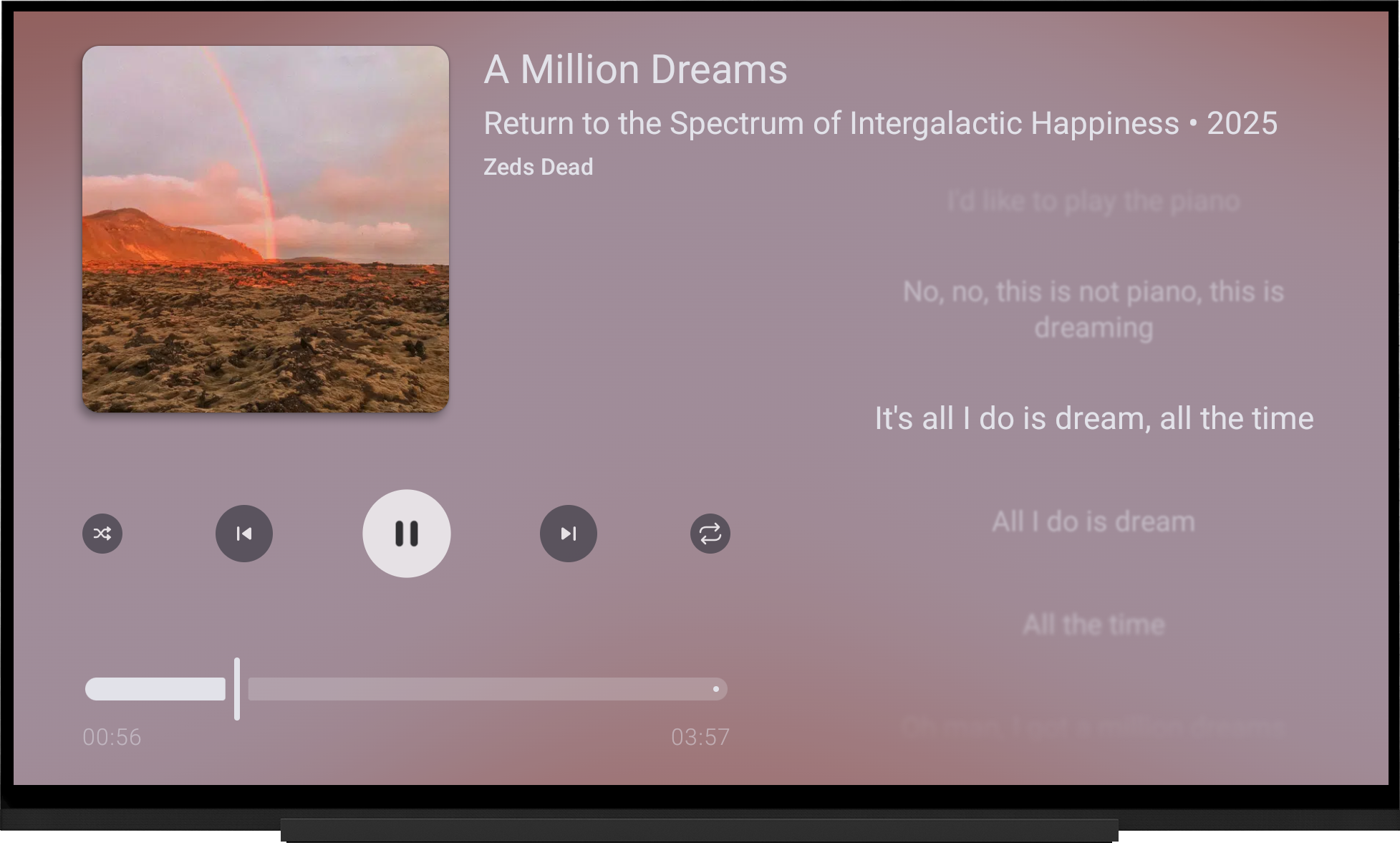
Tempus is phenomenal. I switched to navidrome on my server to use it. Chora is also good, and I use it on my TV (works well on any screen). If you don’t mind closed-source, Symphonum is excellent.
If you are using Jellyfin, it works well on PC, with Fintunes on mobile.
You can find a number of good apps for navidrome here. I quite like Strawberry, which is cross-platform. I use it locally for library management.
I connect everything with Tailscale, which may or may not work on your work network, depending on how locked down the network is. I never had an issue.

The proper way to eat salad is with chopsticks. Ever tried to pick up a flat piece of lettuce with a fork? A chopped carrot? A crispy crouton??

The cycle of enshitification is complete.
They realized they could stay a profitable company as a hardware company. Unfortunately, they would only continue to make money and not make more and more money. So they switched from a hardware company to a content company because line go up.
This is from the same developer. A focus is on short form video.
No problem. By the way, this is a HUGE improvement over dawarich IMO. On my system, it just works extremely smoothly and connecting it with other services worked seamlessly.
I’m now using OwnTracks on mobile, and it was easy to connect to Immich and see my photos on the timeline. This is great! Thanks for sharing it.
Home Assistant isn’t FOSS? How?
I’m trying this out right now. I’ve been using dawarch but it still has some ironing out to do.
FYI, the wget command pulled the github web page HTML where the file is hosted instead of the file itself. Weird. Easy fix but I’m guessing that’s a GitHub issue.

Thank you.
I’ll stick with the games for now.
As I said, there have been reasonable updates and it seems that the dev is taking some care. Still, several of these projects really require some specialized knowledge. I wouldn’t trust my email to something that hasn’t been carefully built and checked by people who know their stuff.
As others have said, LLMs simply do not have such a potential.
On the other hand, we have fully mapped simple brains, so it seems likely that we may be able to simulate a complete human brain at some point in the distant future. You can download a nematode brain yourself if you want.
Euro-Office and OnlyOffice don’t “only support” OOXML. Where did you get that idea?
And not every software developed in Russia is “riddled with Russian spyware.” The code is open so where do you suppose all this supposed spyware is hiding? Or is that just fear-mongering?
I’d love for LibreOffice to do a serious modernization to be a viable alternative. But for most users, it feels like a downgrade whether or not it is technically better under the hood. I use OnlyOffice these days even though it has a lot more bugs because the UX is just that much better in spite of it.
I think I tried using AgenDAV - CalDAV web client at one point but I either ran into a speedbump or I decided I didn’t need it. Is that the same? I also found this vibe-coded thing while searching just now.
Anx reader syncs stats and position across devices in this way, but I don’t think it runs on the kobo reader.
Yes, radicale works great, but the UI is pretty spartan. It will manage the data, but requires a client to make edits or view the content.
First, you will have to export any existing calendar and contacts as files. It depends on what you’re currently using. Contacts should probably be a vcf file, and a calendar should probably be an ics.
Next, use the ↑ button in radicale, select the exported files, and it will create a new “collection” as shown in your post. You can also create a new empty collection to use as you wish. Radicale will not merge files, but you can use a client to do that once you have created the collection in radicale.
You will have to find a client that will sync. On Android, DAVx5 will integrate it into the system so basically any client can access it. Certain Android apps may connect directly, but it’s pretty hit or miss. On desktop, I use Thunderbird which works very well, but there are other options. You will use the blacked-out URL in your post to add the contacts and calendar. Check the individual app documentation or make another post if you want help.
Oh, and the last thing… Of course the client will have to be on the same network. If you want to access it remotely, you will want to set up something like wireguard (I use Tailscale, which is dead simple).
It’s a shame because I really do believe in the project. I just want it to be better.
It’s a poorly designed standard without a doubt. But it is the format people use, and no one who uses it is paying Microsoft (including LibreOffice).
Whinging about people using it is not the way to make useful software.
I really don’t get this latest series if tantrums from LibreOffice/The Document Foundation. They are attacking every other up-and-coming open source document project.
Are you mad about people choosing a different project that’s easier to switch from M$? Stay mad I guess, or make your project better. LibreOffice hasn’t had a major UI update in a decade, and it was a decade overdue at the time. The menus are a crowded mess with poorly thought-out hierarchy. Mobile and collaborative editors are a joke. No one cares if LibreOffice technically has the best backend, with the most accurate rendering and niche features, if it is harder for the average mainstream user to learn and use.
You can burn your energy bemoaning the loss of users… or you can be better and win them back. Rarely both.
Last thing, a few facts about the “dreaded” OOXML format they are railing against.














Same in Korea, but it’s actually effective: