For an autonomous platform with some sort of safety mechanisms for jettisoning the air bag if a catastrophic failure occurs, hydrogen does in fact sound like a way better and less scarce lifting gas.
Not necessarily. It’s not about the boom factor alone - hydrogen is a small atom, and so under pressure, most commonly used materials are permeable to it. It leaks through every material. It really takes something as solid as steel pipes for hydrogen atoms to not work their way through and escape. So while hydrogen would be cheaper to produce at scale, it’s also constantly leaking out of any container.
For wind turbines, static electricity and storms would be huge risks as well, so the application of a floating wind turbine would not be ideal.
If you’re producing electricity in it, you can always bring some water up and use some of that electricity to extract hydrogen from the water to make up for any leaks.
It really depends how bad the leaking is since that dictates how much weight of water is needed to be brought up and electricity must be used for hydrolysis.
No worries, that only happens if there’s a spark, like for instance some static electricity. Shouldn’t be a problem here, surely this thing won’t generate any of that.
That helps against sparks jumping between the balloon and the ground, but things could still get zappy between the individual components of the balloon.
“Skytanic” was a great episode of Archer. For anyone that hasn’t seen it, the running gag is that Archer thinks the non-flammable helium is going to explode the blimp they’re on leading to things like this slap


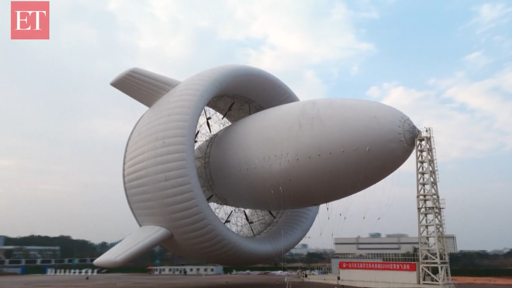
Wouldn’t hydrogen be better for lifting something like a wind turbine.
Yeah, that’s what the folks who designed the Hindenburg thought as well.
Wasn’t the way the Hindenburg burned due to both the Hidrogen AND the alumium oxide paint covering it?
For an autonomous platform with some sort of safety mechanisms for jettisoning the air bag if a catastrophic failure occurs, hydrogen does in fact sound like a way better and less scarce lifting gas.
Nah, it’s perfect!
Not necessarily. It’s not about the boom factor alone - hydrogen is a small atom, and so under pressure, most commonly used materials are permeable to it. It leaks through every material. It really takes something as solid as steel pipes for hydrogen atoms to not work their way through and escape. So while hydrogen would be cheaper to produce at scale, it’s also constantly leaking out of any container.
For wind turbines, static electricity and storms would be huge risks as well, so the application of a floating wind turbine would not be ideal.
If you’re producing electricity in it, you can always bring some water up and use some of that electricity to extract hydrogen from the water to make up for any leaks.
It really depends how bad the leaking is since that dictates how much weight of water is needed to be brought up and electricity must be used for hydrolysis.
Even with steel pipes you get problems with hydrogen embrittlement because hydrogen diffuses into the steel and can cause it to crack.
Helium does a pretty good job of that too.
Yes, but I think hydrogen likes to go bang 🧨💥
No worries, that only happens if there’s a spark, like for instance some static electricity. Shouldn’t be a problem here, surely this thing won’t generate any of that.
Wouldn’t this still need to be tethered to the ground? Would that likely have grounding cables?
That helps against sparks jumping between the balloon and the ground, but things could still get zappy between the individual components of the balloon.
“Skytanic” was a great episode of Archer. For anyone that hasn’t seen it, the running gag is that Archer thinks the non-flammable helium is going to explode the blimp they’re on leading to things like this slap
“M” as in “Mancy!”
“What part of this you’re not getting?”
“All of it, obviously!”