In all honesty I wouldn’t call this a “defeat” by any metric. While Pakistan’s air force is generally regarded as having performed better than expected during the recent clashes, neither side could effectively control the air space or even really contest the other’s air space for any significant time. The main advantage Pakistan has seems to be a doctrinal one. They appear to put greater emphasis on aerial radar and long range reconnaissance. With the age of flight by sight and dogfighting long over, the Indian approach will need amendment. India seems to currently be converting several former civilian A321s for military use in order to equip them either with the Israeli made Radar system they already employ on their dated IL-76s or with a domestic radar system, that we can’t yet evaluate. When that capability is online the IAF should be able to bring its numbers advantage to bear more easily.


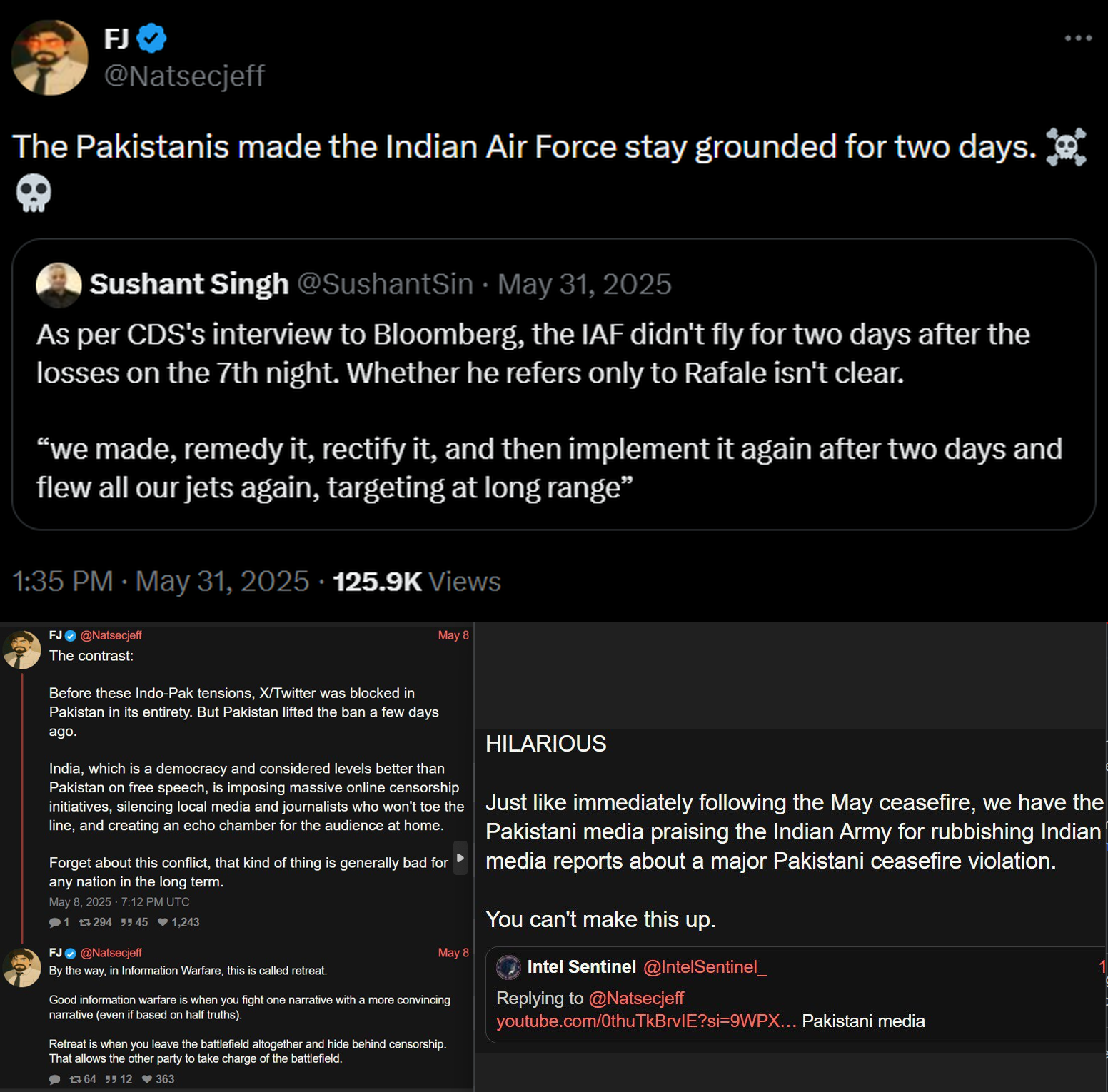
In all honesty I wouldn’t call this a “defeat” by any metric. While Pakistan’s air force is generally regarded as having performed better than expected during the recent clashes, neither side could effectively control the air space or even really contest the other’s air space for any significant time. The main advantage Pakistan has seems to be a doctrinal one. They appear to put greater emphasis on aerial radar and long range reconnaissance. With the age of flight by sight and dogfighting long over, the Indian approach will need amendment. India seems to currently be converting several former civilian A321s for military use in order to equip them either with the Israeli made Radar system they already employ on their dated IL-76s or with a domestic radar system, that we can’t yet evaluate. When that capability is online the IAF should be able to bring its numbers advantage to bear more easily.