

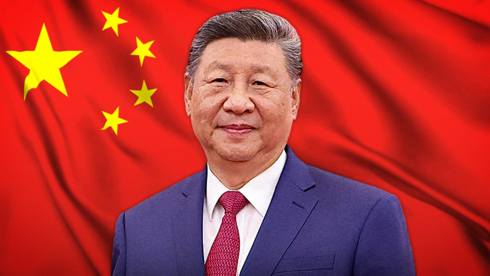
Members of Kibbutz Hanita near Israel’s northern border are demanding $11 million from Ballet Vision, the Chinese fund that controls 80% of the Hanita Lenses plant, accusing it of refusing to exercise an option to purchase the kibbutz’s remaining shares, according to a lawsuit filed in Tel Aviv District Court.
In a response letter attached to the lawsuit, the Chinese fund said that since the outbreak of the war in Israel, Beijing has classified Israel as a “high-risk area” and imposed a ban on any new Chinese investments in the country, making it impossible to carry out the option.
According to the lawsuit, in 2021 the kibbutz sold 74% of Hanita Lenses, which manufactures intraocular lenses for medical use, to Ballet Vision for $35 million. Of that sum, $25 million was paid to kibbutz members, with an additional $10 million injected into the company.
No? I have a job in the US, that’s what I do for a living.
Says who? Legitimately. Socialism requires public ownership to be the principle aspect of the economy and the working classes in charge of the state, not the absence of private property entirely. No economy is “pure,” which is why Marx focused on developing dialectical materialism as a frame of analysis. Your analysis is metaphysical in nature.
Can you elaborate? I gave a large and well-sourced explanation of China’s economy and democratic structures. China does not have a class of lords, nor peasantry that pay their lords tribute in the form of agrarian goods like rice using parceled out land. This argument of yours is absurd.
Let’s indeed not forget the few hundred deaths in Beijing on June 4th, 1989, and not forget the students on Tian’anmen Square itself that were peacefully dispersed, which even Wikipedia agrees on.
Let’s not forget Xinjiang either. In the case of Xinjiang, the area is crucial in the Belt and Road Initiative, so the west backed sepratist groups in order to destabilize the region. China responded with vocational programs and de-radicalization efforts, which the west then twisted into claims of “genocide.” Nevermind that the west responds to seperatism with mass violence, and thus re-education programs focused on rehabilitation are far more humane, the tool was used both for outright violence by the west into a useful narrative to feed its own citizens.
The best and most comprehensive resource I have seen so far is Qiao Collective’s Xinjiang: A Resource and Report Compilation. Qiao Collective is explicitly pro-PRC, but this is an extremely comprehensive write-up of the entire background of the events, the timeline of reports, and real and fake claims.
I also recommend reading the UN report and China’s response to it. These are the most relevant accusations and responses without delving into straight up fantasy like Adrian Zenz, professional propagandist for the Victims of Communism Foundation, does.
Tourists do go to Xinjiang all the time as well. You can watch videos like this one on YouTube, though it obviously isn’t going to be a comprehensive view of a complex situation like this.
Let’s not forget Taiwan, either, where the nationalists that fled the mainland and slaughtered domestic resistance in the White Terror have solidified.
You have no points.
Removed by mod
The presence of the bourgeoisie, and by extension private property, is in fact a contradiction, in the dialectical sense. This doesn’t mean it is antithetical for private ownership to exist within socialism, however, just that it is something that must be gradually negated. In the PRC, public ownership is the principle aspect of the economy. Private ownership is about half sole proprietorships and cooperatives, and the rest governs secondary and medium firms.
The purpose of this is that markets and private ownership naturally centralize into monopoly, ie they socialize as Marx says. As these firms grow, the CPC folds them into the public sector, negating them. To nationalize even the small and medium firms, dogmatically, before they socialize, is contradictory with Marxist analysis.
Class struggle continues under socialism, that’s factually true. It is only when all of production and distribution have been collectivized globally that class struggle can truly be negated. Since we cannot jump straight there, the proletariat stands above the bourgeoisie by holding the state and the state controlling the large firms and key industries.
China’s system is already democratic, as I explained. At a democratic level, local elections are direct, while higher levels are elected by lower rungs. At the top, constant opinion gathering and polling occurs, gathering public opinion, driving gradual change. This system is better elaborated on in Professor Roland Boer’s Socialism in Power: On the History and Theory of Socialist Governance.
Further, the idea of a “social credit score” is a myth. The system was only partially implemented, and is about businesses, not the working classes. The fact that you claim I am the one “blasting propaganda at the expense of truth” as you quite literally are dogmatically spouting propaganda based on fabrications and exaggerations is peak hypocricy.
Sure they are. I’m plenty critical of China for valid reasons, such as their presently poor LGBTQIA+ legislation (though it has been gradually improving) or their backing of Cambodia over Vietnam back during the time of Pol Pot. Your “criticisms,” more often than not, aren’t logically justified.
Removed by mod
Just did, the fact that you jump to dehumanization instead of responding to anything I am actually saying is evidence to your incapability of doing so.
Removed by mod
I answered every single one of your claims, fully, and with evidence. What issues did I sidestep? Which of my claims are “propaganda?” You’re sidestepping the entire argument itself because you can’t make one, so you jump to insults to protect your honor.