

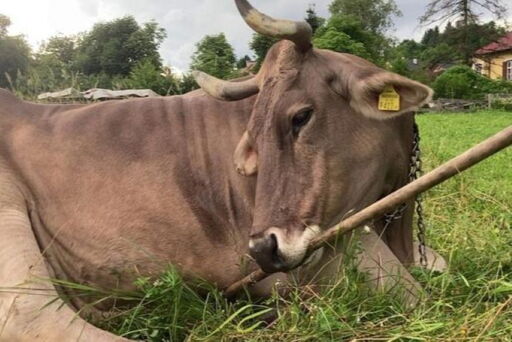
Scientists investigating video of a cow using tools, and later conducting some basic psychology experiments on said cow, say their findings could expand the list of animals capable of tool use.
Scientists investigating video of a cow using tools, and later conducting some basic psychology experiments on said cow, say their findings could expand the list of animals capable of tool use.
I don’t know, the whole thing about Santa keeping a list of good children and bad children (who get toys and coal, respectively) seems to be a primary component of the myth still. I actually think it evolved as a gauge of critical reasoning: there’s an age by which children are expected to stop believing in Santa, because the story makes no sense and won’t hold up to critical scrutiny. The reward for making this breakthrough is getting to be in on the conspiracy with the adults: secretly helping with the ruse while continuing to reinforce the myth with younger children. It’s a coming of age ritual. It’s also kind of a culture-wide prank that all adults continuously play on all children, like the tooth fairy who I think exists for similar reasons.
Unlike the tooth fairy though, who’s just there to help kids let go of their baby teeth, Santa’s largess is explicitly contingent on good behavior, which is where the manipulation comes in. Gifts that come with strings attached to behavior aren’t charity, they’re a transaction. Children are taught that goodness is rewarded with treats and badness is punished with coal and no treats. I guess calling it a bribe is a little harsh, but it’s certainly transactional. Santa also has the benefit of being all-seeing, so he can monitor your behavior even when the grownups aren’t watching, which is a pretty convenient way for grownups to control behavior in kids when they’re unsupervised. Sort of a spiritual panopticon. The whole idea is to trick children into behaving by making them believe they’re being constantly surveilled by a spirit judge, who will reward them or punish them according to his determination of whether they are good or bad.